Standard sizes and why older garages differ
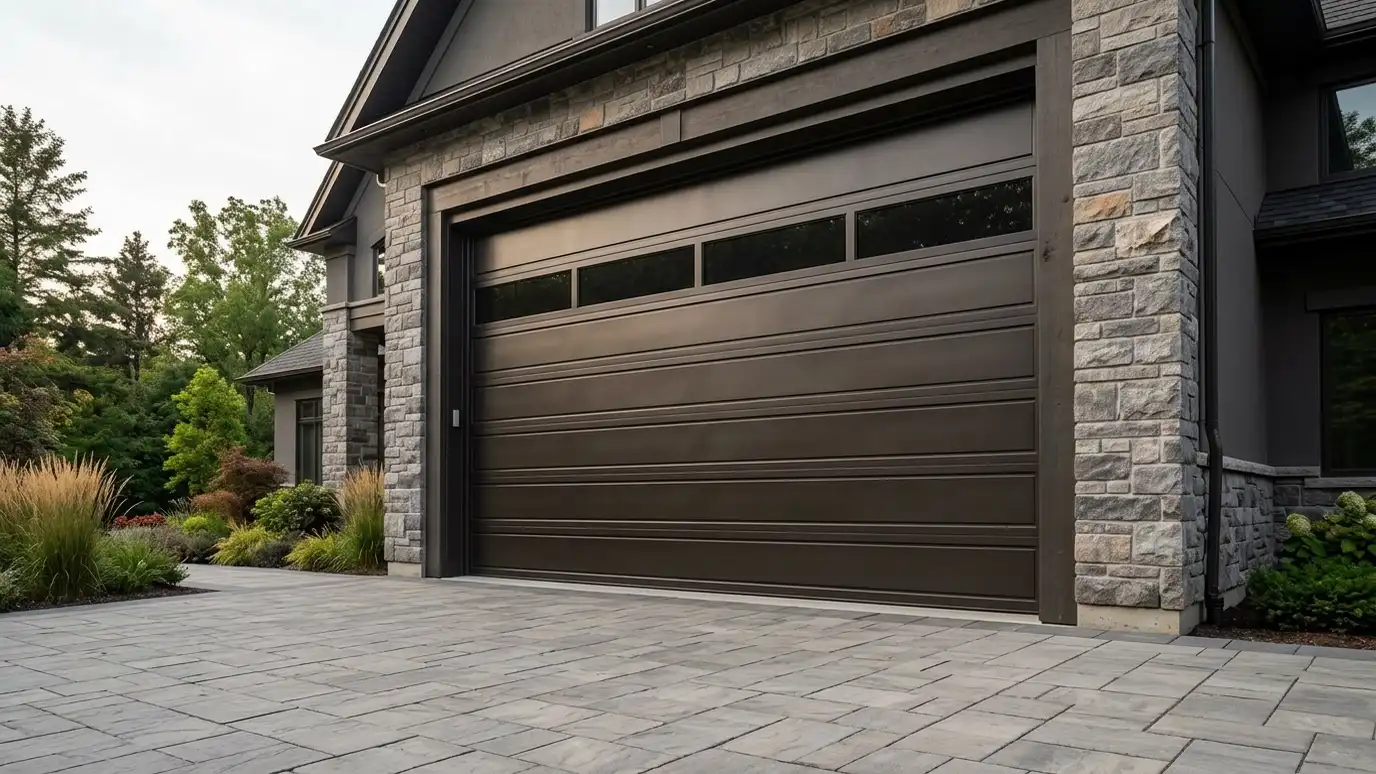
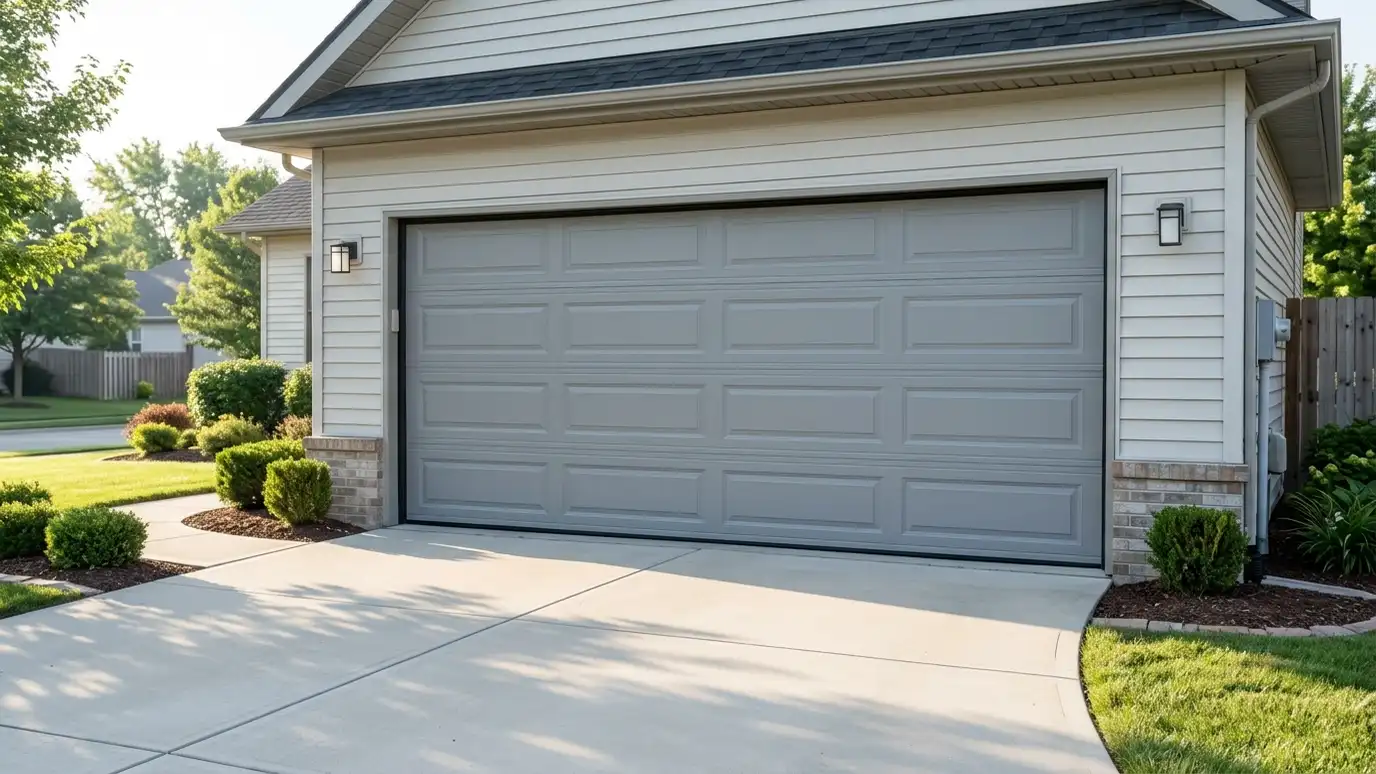
Most new homes use standard openings: single doors about eight or nine feet wide, double doors about sixteen feet wide and heights of seven or eight feet. Older garages often are not standard, because they were built to fit the cars and the framing of their time.
A door that is not made for your opening will leave gaps or need trim work, so measuring the real opening is essential.
When in doubt, order a door sized to the actual measurements rather than adjusting the opening.
Keep your original paperwork if you have it. Door size is often printed on a label inside the garage or on the old order, and it gives us a starting point, though we still measure the real opening before ordering.
Measuring the opening
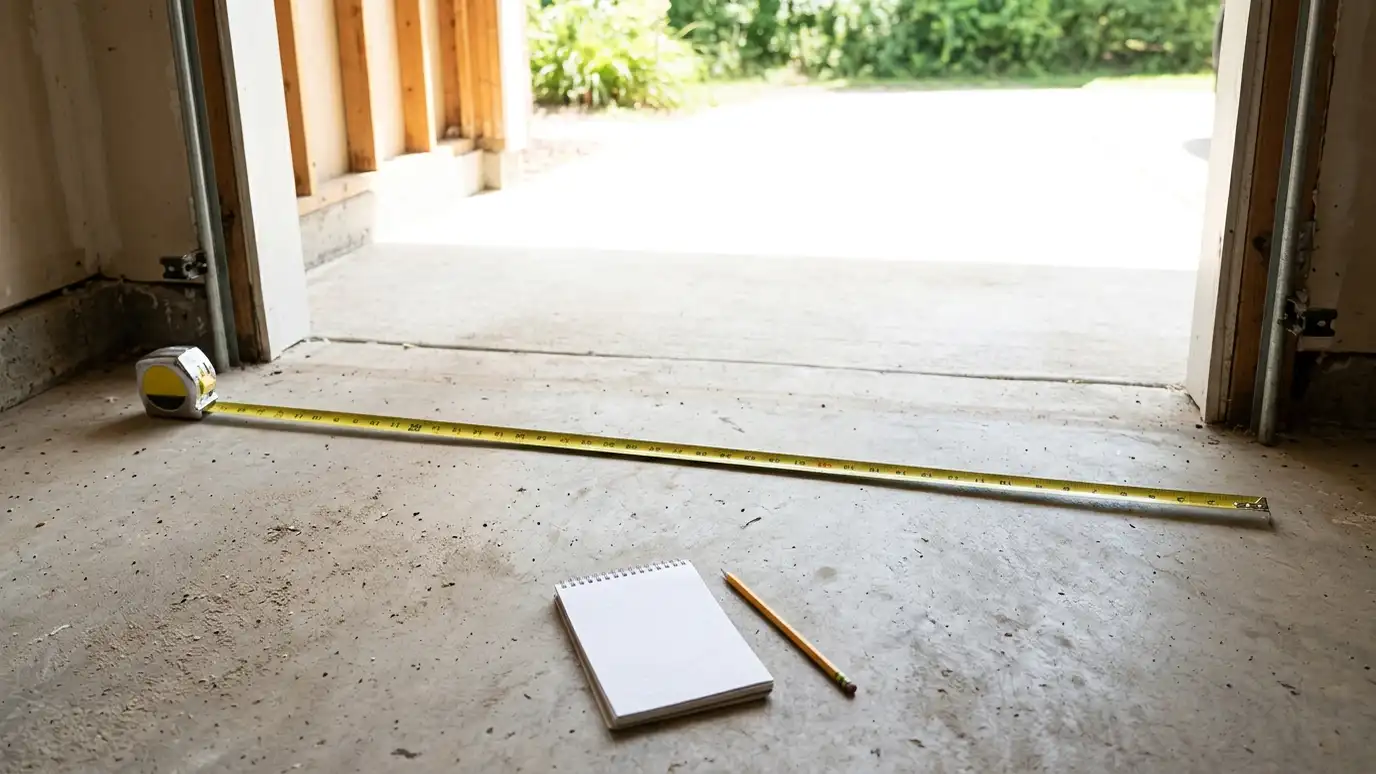
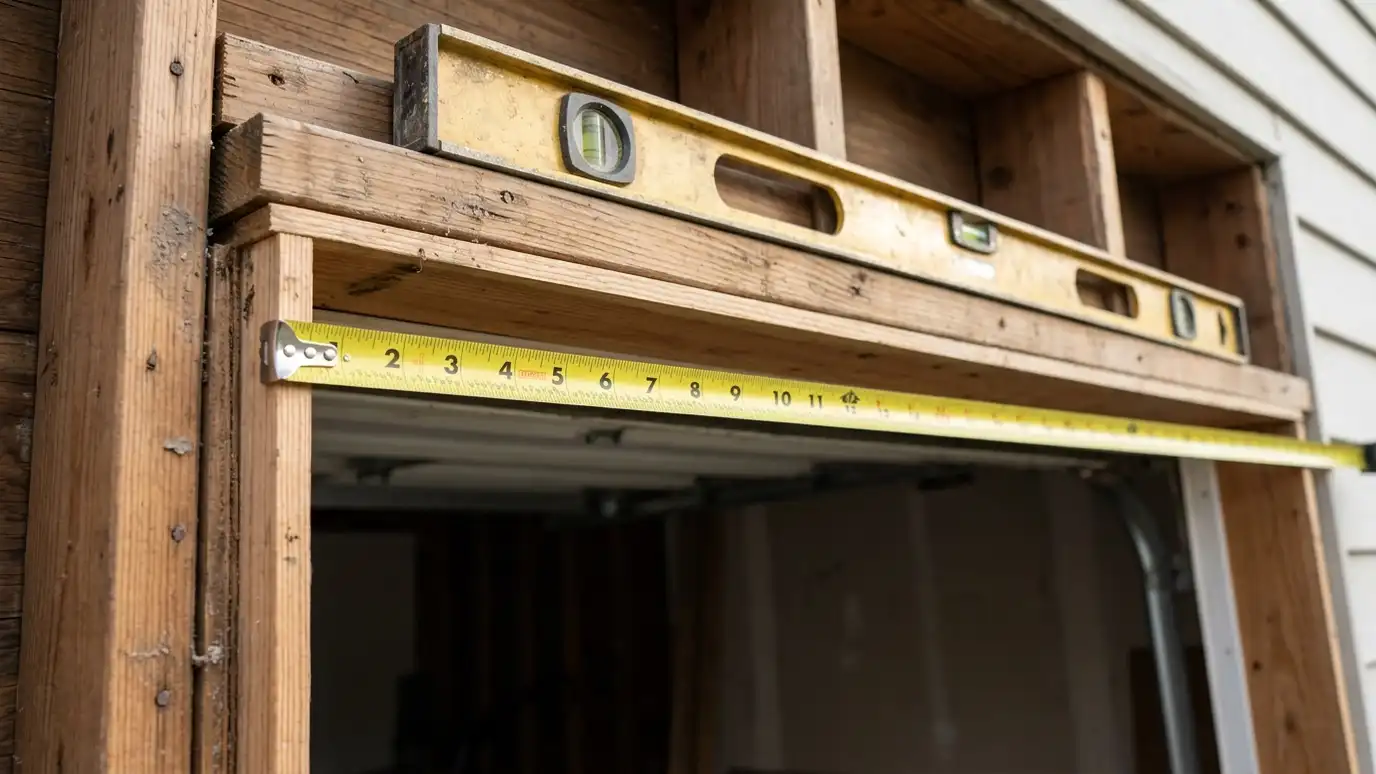
Measure the width at the top, the middle and the bottom, and the height at the left, the middle and the right. Use the smallest numbers. Older framing can be out of square, and a door has to fit the tightest point.
Measure the finished opening, from the inside face of the jambs, and note the thickness of any trim.
Write the numbers down and take photos of the opening and the ceiling.
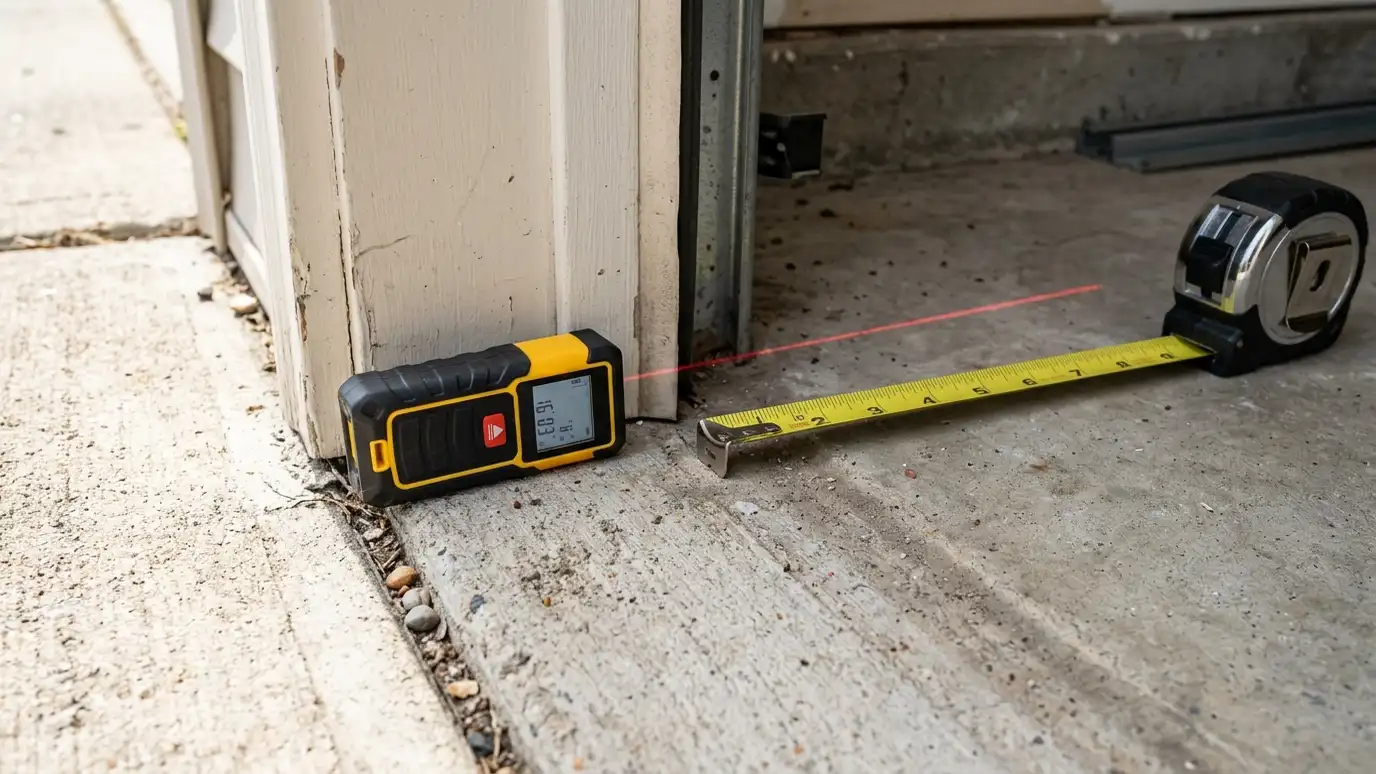
If you are measuring yourself, use a steel tape rather than a cloth one, and measure twice. Photograph the tape against the opening, and include the ceiling and the sides so we can see how much room there is.
Headroom, side room and back room
Headroom is the space between the top of the opening and the ceiling or the lowest obstruction. Standard tracks need a certain amount, and low-headroom kits need less. Side room is the space on each side of the opening for the track, and back room is the depth of the garage.
The door must travel back along the ceiling when open, so the garage must be deep enough.
We check all three, since they decide the track type and the springs.
Remember that the opener also needs room. A rail mount needs space on the ceiling, and a wall-mount unit needs space beside the shaft. We note where the opener will go as part of the same visit.
Obstructions
Pipes, lights, vents, beams and a garage ceiling that is not flat can all block the track path. An existing opener rail or storage rack also takes space.
We note what is in the way and plan around it, sometimes by moving a light or choosing a different track layout.
Photos of the ceiling help us plan before the visit.
Take a look at the garage ceiling from the floor. If you can see a heavy beam, a drop in the ceiling or pipes across the track path, mention it. Moving a light or re-routing a conduit is easy when it is planned.
Special setups
Tall ceilings can use high-lift tracks. Low ceilings can use low-headroom hardware. Garages with an angled roof can use special track. Garages with a finished ceiling may suit a wall-mount opener.
RV and workshop doors may need extra height and strong springs. A custom door is made to measure for these spaces.
Tell us how you use the space, and we will recommend what fits.
If you are not sure which setup suits your garage, describe how you use it. A workshop, a car lift or an RV bay each suggests a different door height and track layout, and we plan around the real use.
Measure once, confirm twice
We recommend that we measure before you order, even if you have measured yourself. A small error in width or height can mean a door that does not fit.
You can use our size planner for a quick idea of what fits, and we confirm everything at the visit.
We give you the measurements in writing, so you can keep them for the future.
After we measure, we write down the final size, the track type, the spring type and any special parts, so the order matches the opening. That written record also helps if you ever need a matching part later.
Measure the real opening in several places, check headroom and side room and let us confirm before you order a door.