Start with a clear idea of what you need
A repair, a new door and a new opener are different jobs, and companies vary in what they do best. Write down what is wrong or what you want, and take a few photos of the door and the opening.
Having a clear description lets you compare responses fairly, and it helps a company give you an accurate estimate.
If you are unsure, say so. A good company will ask questions and help you sort it out.
It also helps to decide what matters most to you before you call. Some owners want the fastest repair, others want the best-looking door and others want to keep costs predictable. Knowing your priorities lets a company tell you honestly whether it is a good fit.
Ask how they measure and diagnose
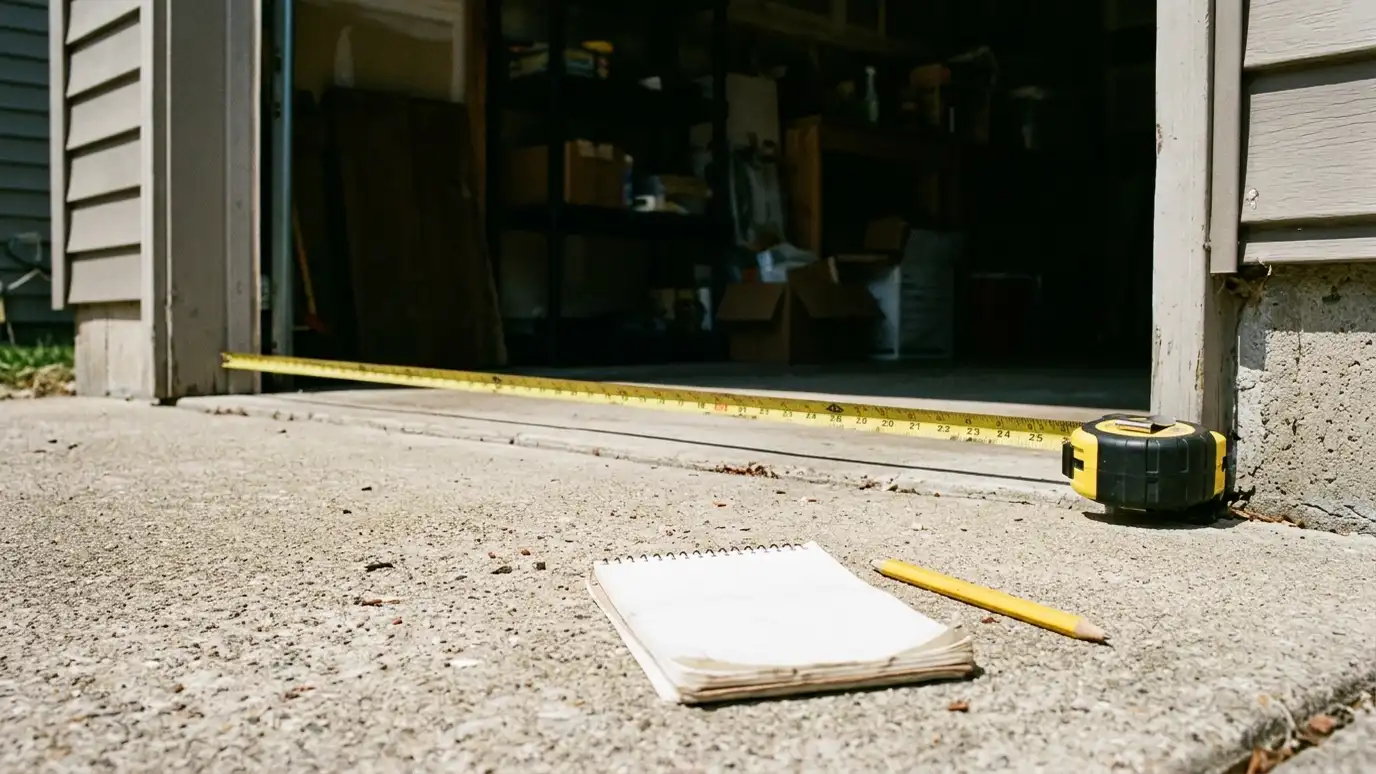
A company that measures carefully and tests the whole door gives you a better answer than one that quotes from a phone call. Ask whether the estimate includes a visit, how they measure and how they check springs, cables and the opener.
For repairs, ask what they will check besides the part you named. A good technician looks at the whole system.
Be wary of anyone who wants to replace parts without showing you what is wrong.
Notice whether the technician explains things in plain language. A good diagnosis comes with a clear reason and a clear option, and you should come away understanding what failed and why it failed.
Compare scopes, not just prices
Ask each company to list the door model, thickness, insulation, spring type, hardware, opener, removal and schedule. A quote that leaves out the springs, the seals or the haul-away is not really lower.
Ask what is not included, and ask what happens if the work uncovers a problem.
Comparing scopes is the easiest way to see which quote is fair.
Ask about the parts as well. Springs, rollers and openers come in different grades, and a quote should say which grade is included. If a company will not tell you, treat that as a reason to keep asking.
Ask about safety and protection
Springs and heavy doors can injure people. Ask how the company handles spring work, how it protects your floors and walls and what happens if something is damaged. Ask for the business credentials your city or county requires.
A company that welcomes these questions and answers them plainly is one you can expect to be careful on the job.
Ask whether installers are employees or subcontractors, and who you will deal with day to day.
Ask what happens after the job. If something is not right a week later, who do you call and how quickly do they respond? A company that has a clear answer to that question is thinking about the long run.
Look at communication
How a company treats you before the job is a good sign of how it will treat you during it. Notice whether they call back, show up when they say they will and explain things clearly.
Ask for the schedule in writing, and ask who to call if you have a question.
A company that stays reachable after the job gives you real peace of mind.
Pay attention to small details, such as whether the office knows your name, whether the technician arrives in a marked vehicle and whether the estimate matches what was discussed. These details add up to a picture of how the company works.
Red flags
Be careful with high-pressure sales, prices that change at the door, unclear scopes and companies that will not put anything in writing. Be careful with anyone who tells you that you need a whole new door without showing you why.
Be careful with offers that are good only if you sign today.
A good company is comfortable giving you time to think and to compare.
When you find a company you like, ask for the scope in writing and take a day to think. A good company will never mind, and that pause is often when you notice the question you meant to ask.
Choose the company that measures carefully, explains the work plainly and puts the scope in writing.