Heat
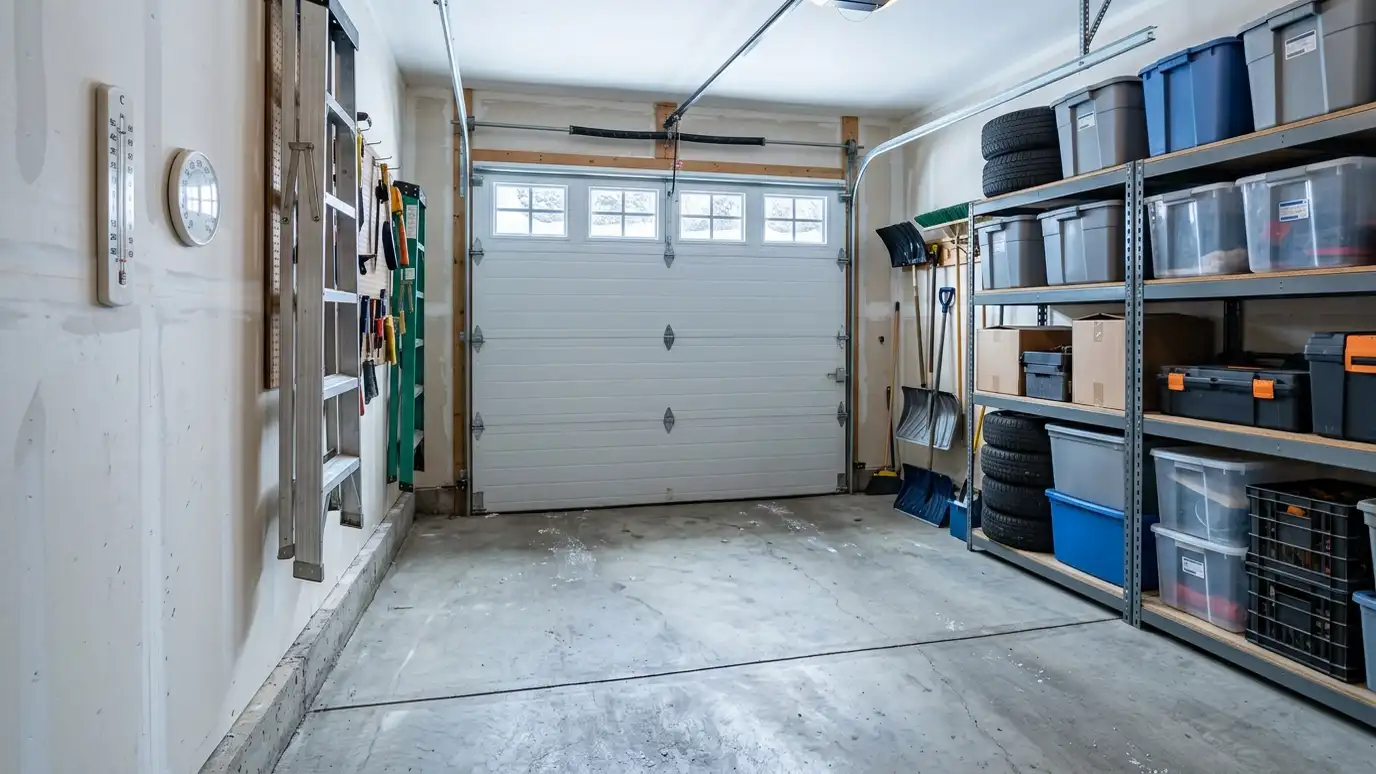
Summer heat expands metal, dries lubricant and can fade finishes. A garage can get very hot, which is hard on openers, remotes and stored items. Insulated doors and good seals help.
Dark doors absorb more heat and may fade sooner, so quality finishes matter.
Lubricate in spring so parts are ready for summer.
Shade matters. A garage door that faces strong afternoon sun ages faster than one in the shade, and a light color, a quality finish and a yearly wash all help it hold up in this part of the country.
Cold
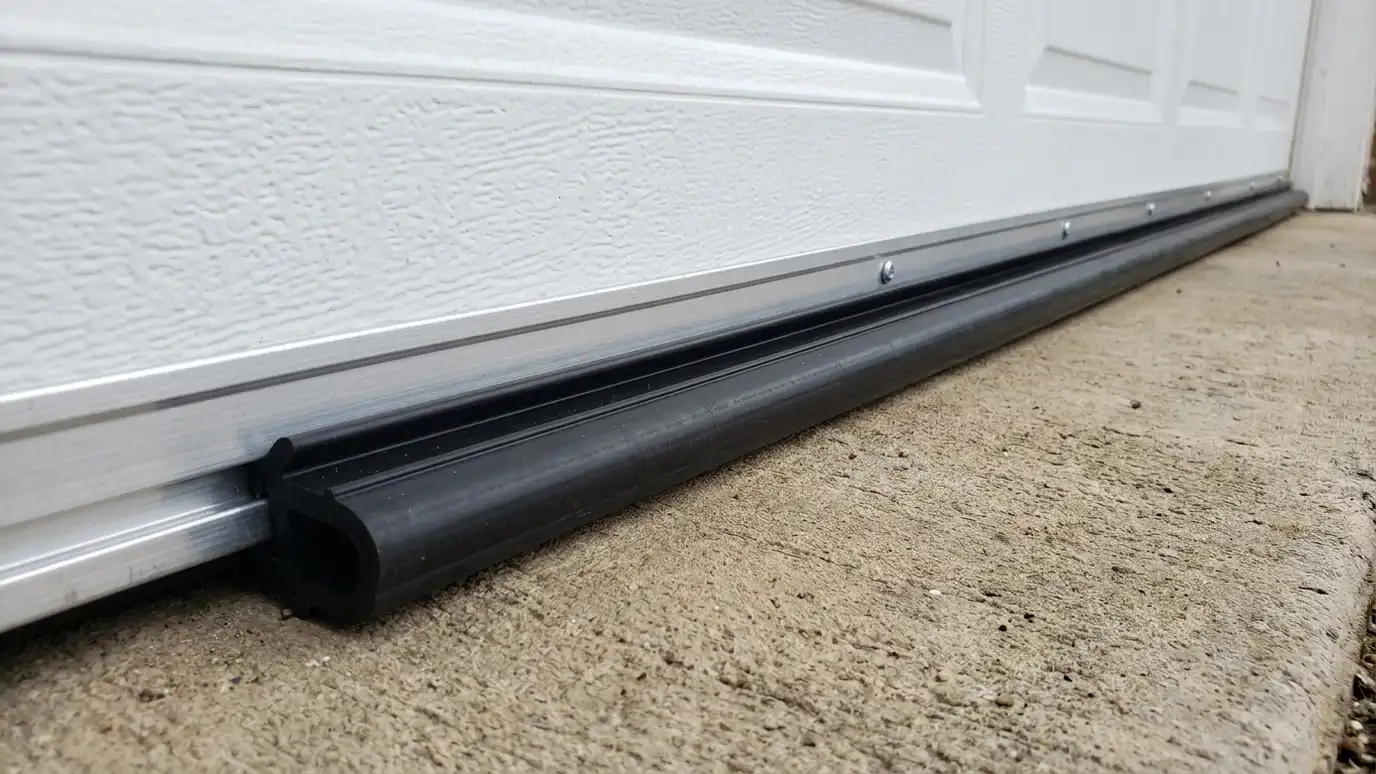
Cold stiffens lubricants and seals, and ice can freeze a door to the floor. Do not force a frozen door, since the seal can tear. Insulation and a fresh bottom seal help in winter.
Springs and cables can be more fragile in extreme cold.
Lubricate in fall so parts move freely.
If you have a heater in the garage, check the seals and the insulation. Warm air escapes through gaps, and a fresh seal set can make a space heater far more effective in winter.
Humidity
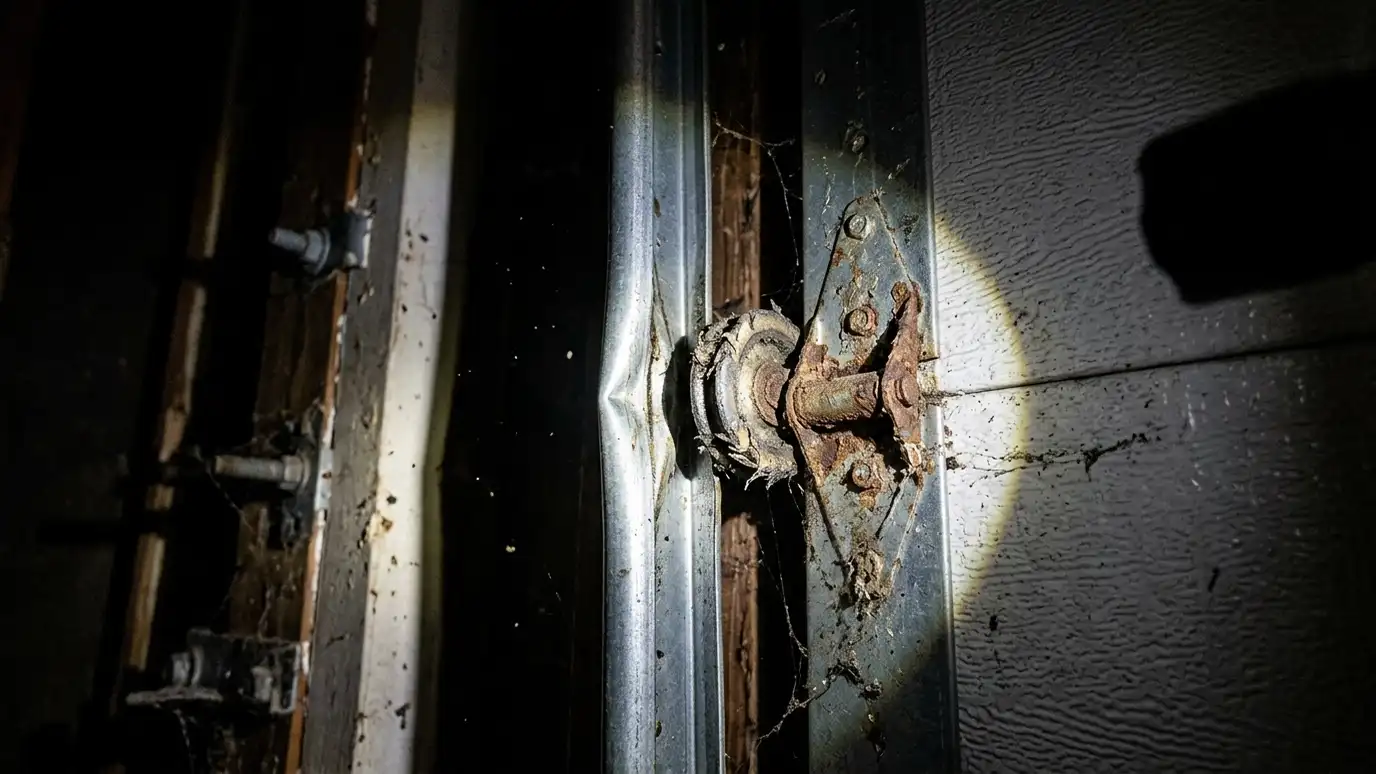
Humid summers can rust steel parts, swell wood doors and encourage mildew in seals. Keep the bottom edge dry and finishes fresh. Clean and lubricate hinges and springs to slow rust.
Good ventilation helps the garage as a whole.
We do not remove mold, and we replace worn seals and clean doors.
Keep gutters and downspouts clear so rain does not pool in front of the door. A little drainage work can stop water from standing against the bottom seal and rusting the lowest panel.
Rain and flooding
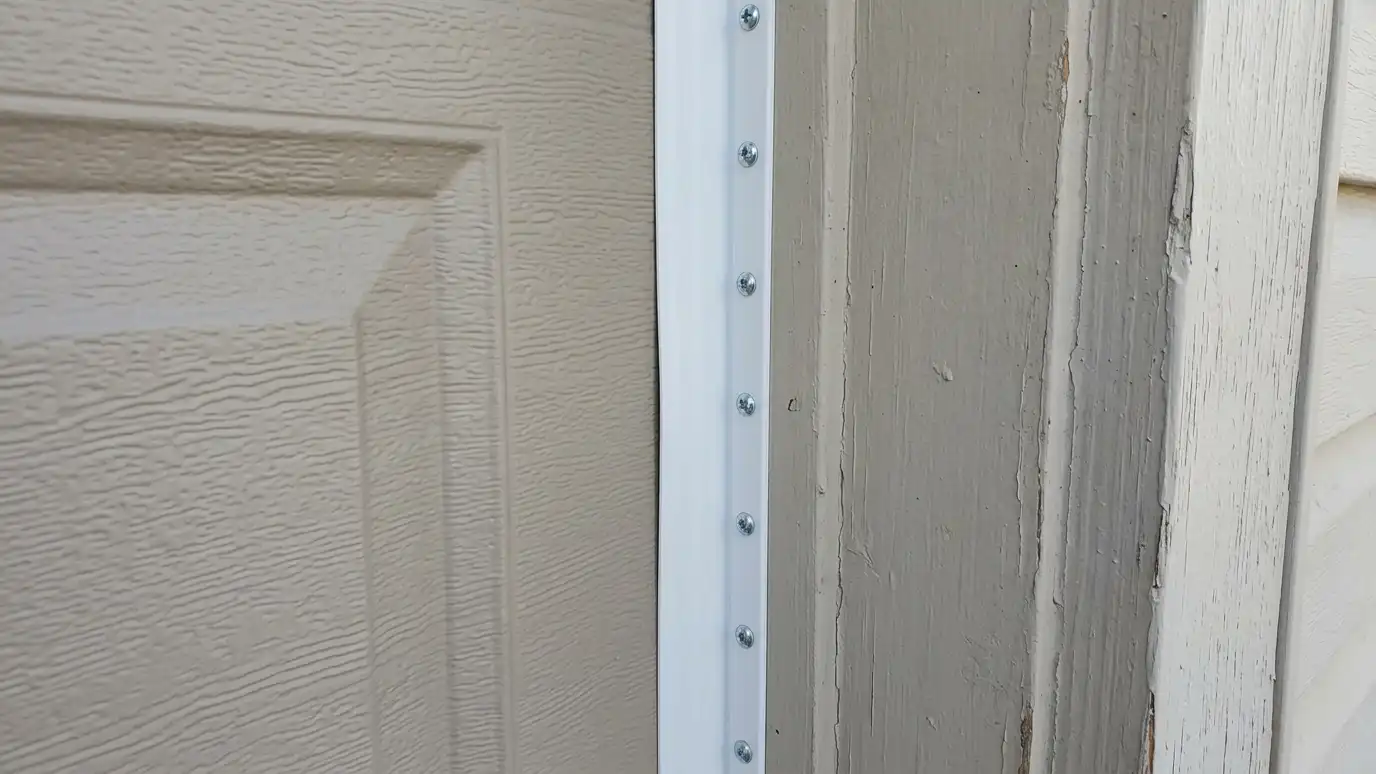
Rain and wind-driven water find gaps at the bottom and the sides. A fresh bottom seal and a threshold strip help keep water out. A sloped driveway can send water toward the door.
Check that gutters and downspouts direct water away.
A door that has been in standing water needs an inspection.
If water has come in, dry the area and look for damage to the bottom panel and the seal. Wet wood swells and wet steel rusts, so we check and replace what is soaked before it gets worse.
Wind and storms
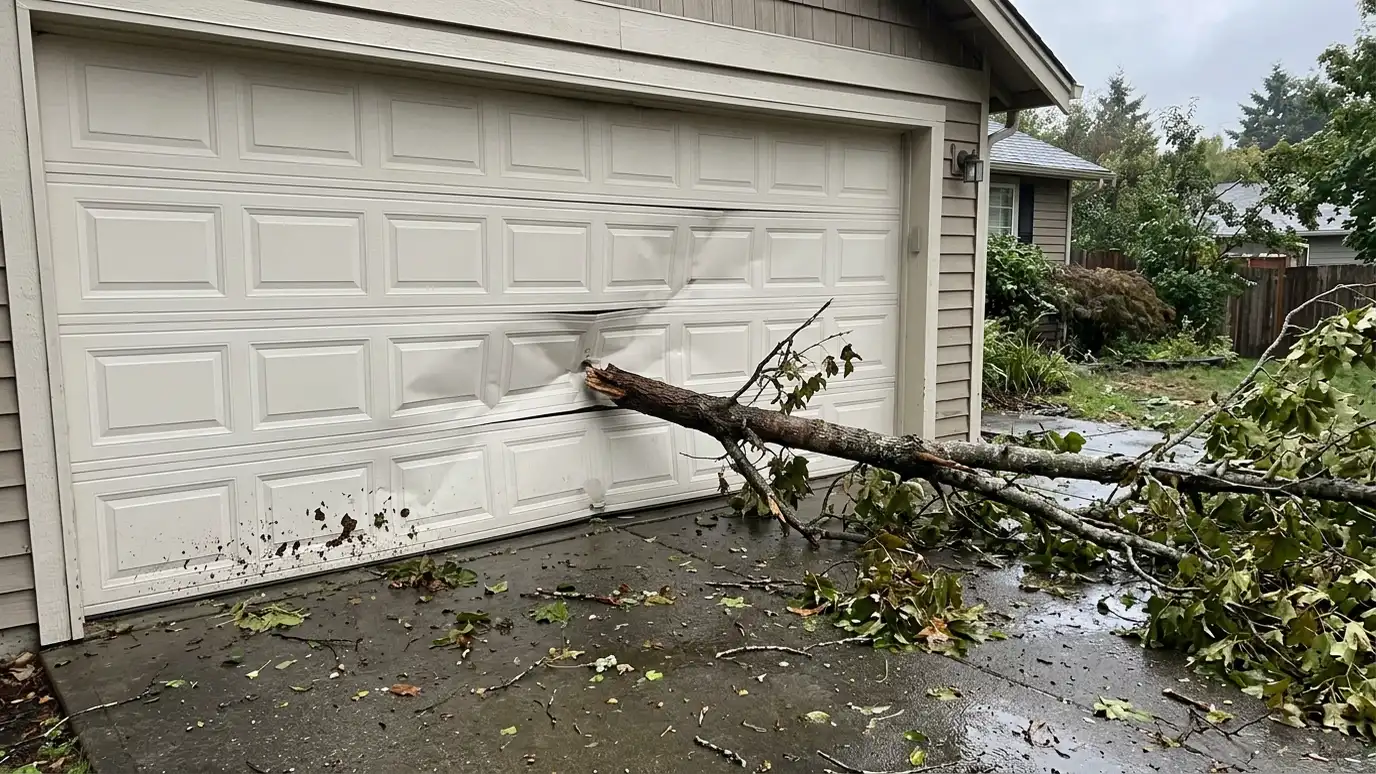
Strong wind can bend tracks and tear panels, and flying debris can dent and crack a door. Storms can also knock out power, which leaves an opener stuck. A battery backup and knowledge of the manual release help.
Inspect the door after a storm before you use it.
Doors with damage should be secured and repaired.
After a storm, check the area around the door for fallen limbs and debris. Remove anything that could jam the tracks, and look at the door for dents before you run it.
Seasonal routine
Do a quick check in spring and fall: clean the tracks, lubricate the moving parts, test the sensors and look at the seals. After a storm, look for dents and bent tracks.
Schedule a professional tune-up each year.
A little seasonal care protects the door through every kind of weather.
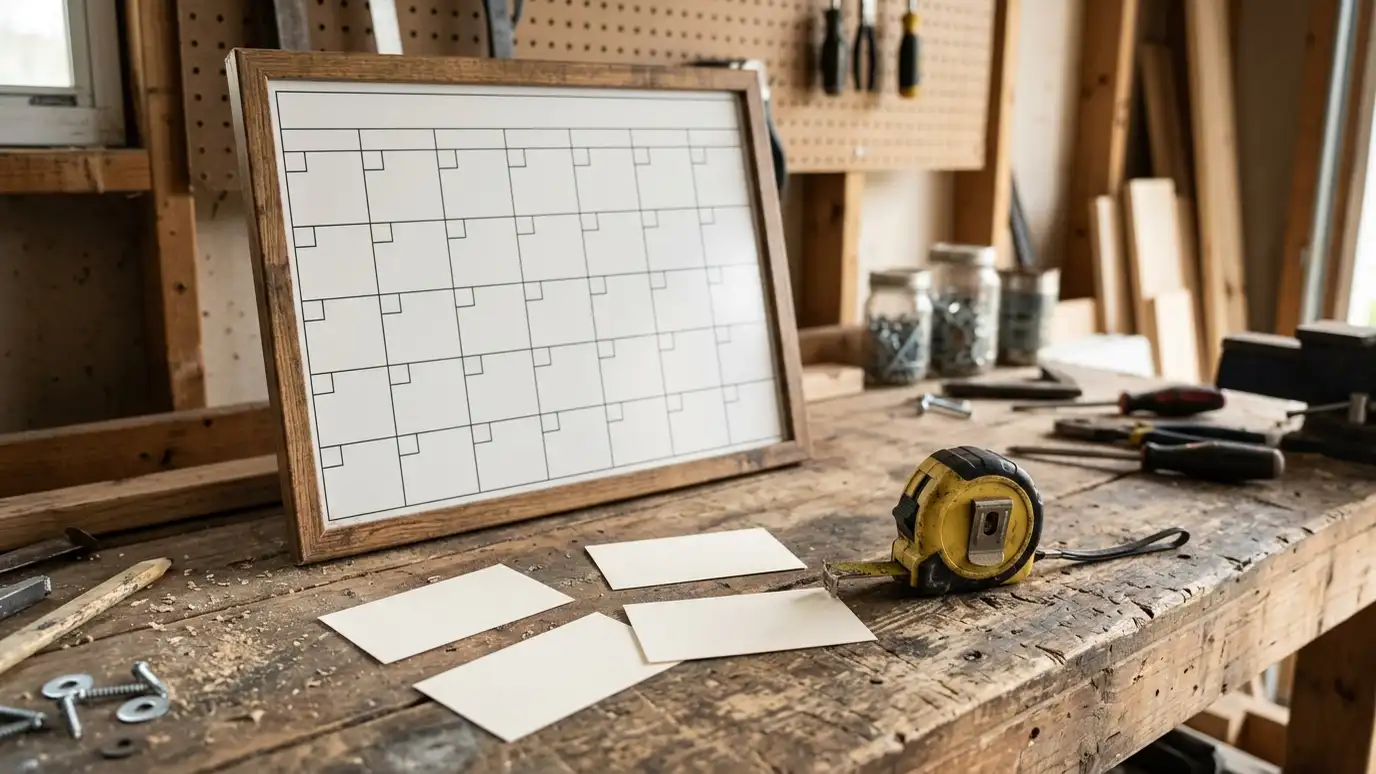
Write down the date of your seasonal check on a calendar, in spring and fall. A routine that fits the weather keeps small problems from growing and helps the door last through every season.
Lubricate and check seals each spring and fall, and inspect the door after any storm before you use it.