Squeaks
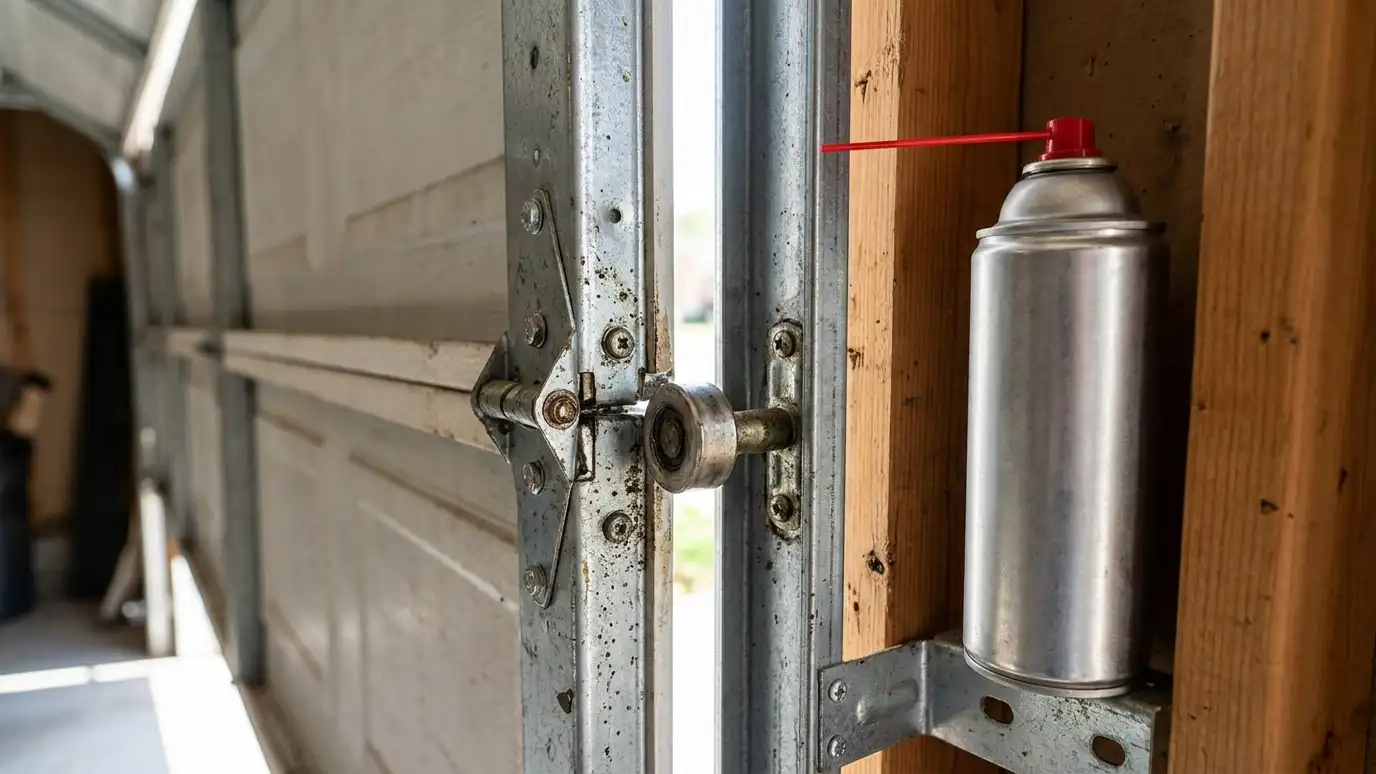
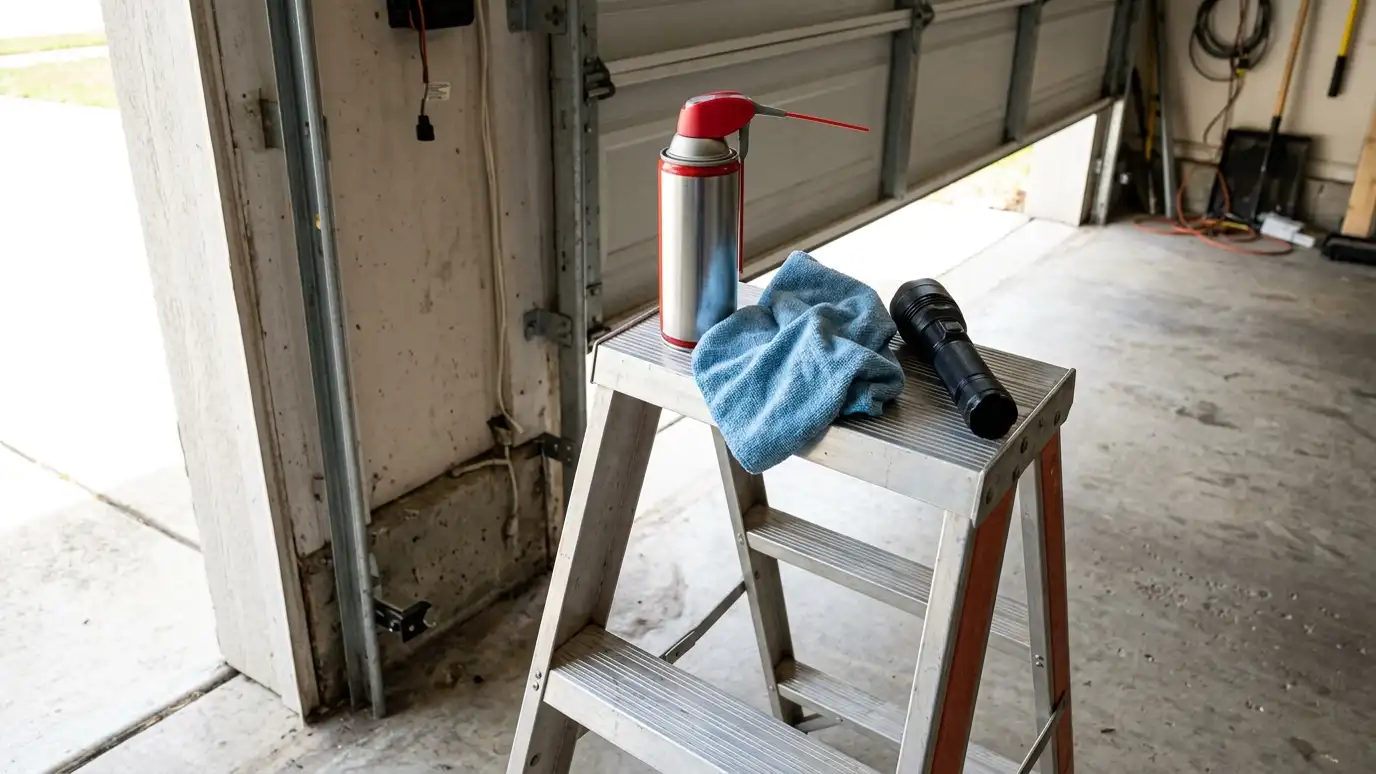
A squeak usually means dry metal rubbing on metal. Hinges, roller stems, spring coils and bearing plates are the usual spots. A light coat of lubricant made for garage doors often quiets them.
If a squeak returns quickly, the part may be worn.
Do not lubricate the track surface, since it collects dust.
Squeaks are often the easiest to fix, so start there. If a squeak returns within days of lubricating, look for a worn hinge or a cracked roller, and consider replacing it rather than spraying again.
Rattles
Rattles come from loose bolts, brackets and track mounts, and from hardware that vibrates against the door. Tightening fasteners often helps. Vibration from the opener can also rattle the rail or the ceiling mount.
A loose panel or a window that is not seated can also buzz.
A tune-up covers all of these.
Rattles can also come from items stored on shelves or from a loose window panel. Check what hangs near the door, and secure anything that vibrates when the door runs.
Grinding and scraping
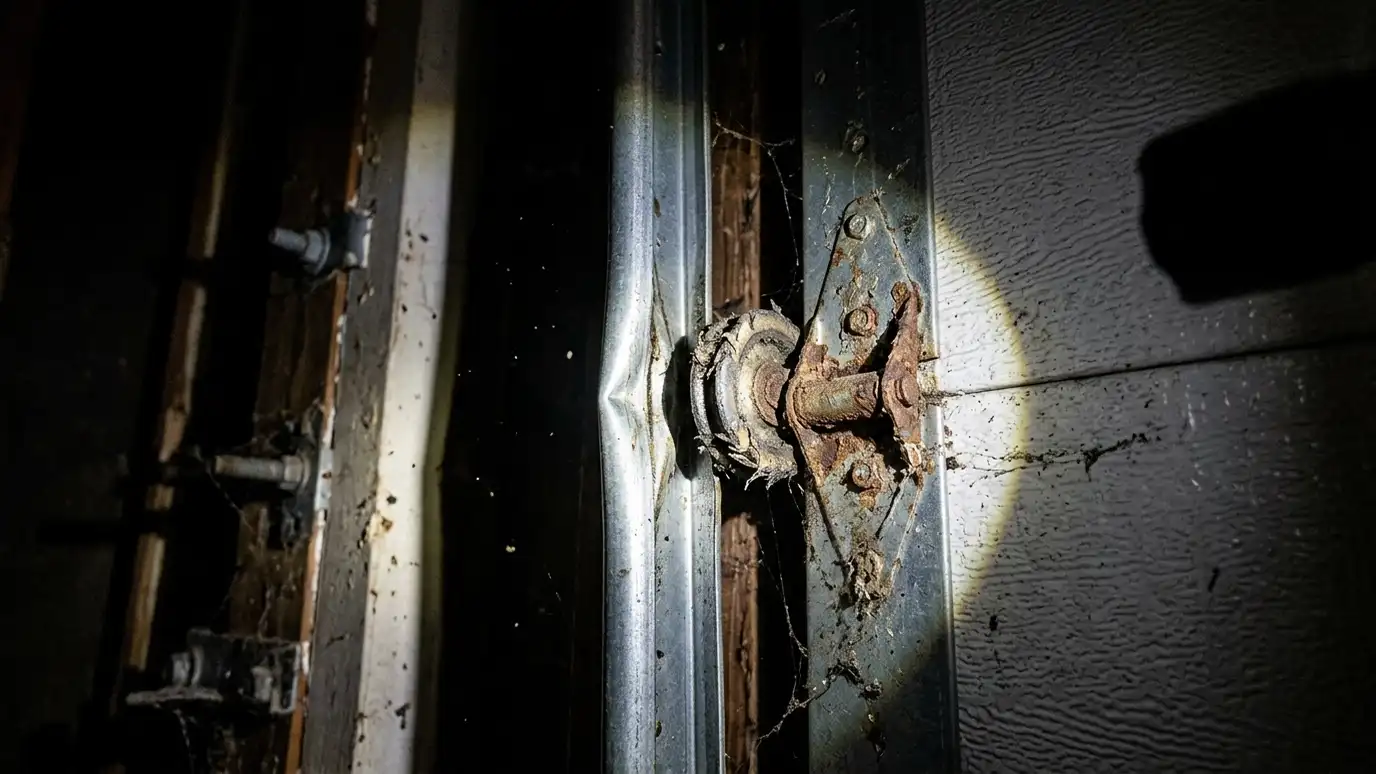
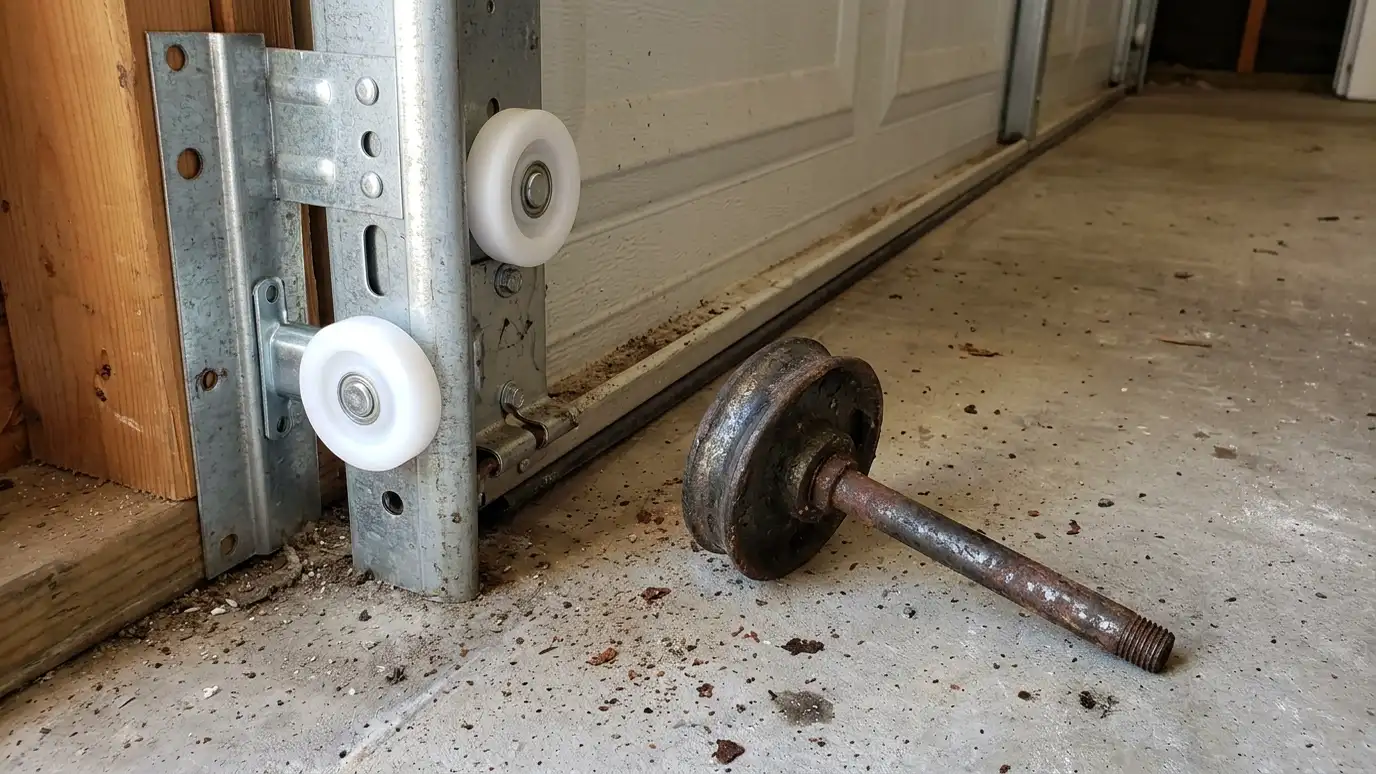
Worn rollers grind, a bent track scrapes and a dirty track drags. Replace worn rollers, straighten or replace bent tracks and clean the track surface.
A grinding opener may have a worn gear.
Stop using a door that scrapes badly, since it can come off the track.
If the grinding is accompanied by uneven movement, stop using the door. A roller that has broken or a track that has bent can lead to a door that comes off its path, which is dangerous.
Pops and bangs
A pop as the door starts to move can be a dry spring or a binding hinge. A loud bang followed by a stuck door is a broken spring. Lubricate springs lightly, and replace them when they are near the end of their life.
A bang when the door closes may mean the opener force or the limit needs adjustment.
Never ignore a sudden loud bang.
If a pop is accompanied by a drop in the door height, treat it as urgent. A spring that has weakened or broken can make the door heavy and unsafe, and it should be replaced by a professional.
Opener noise
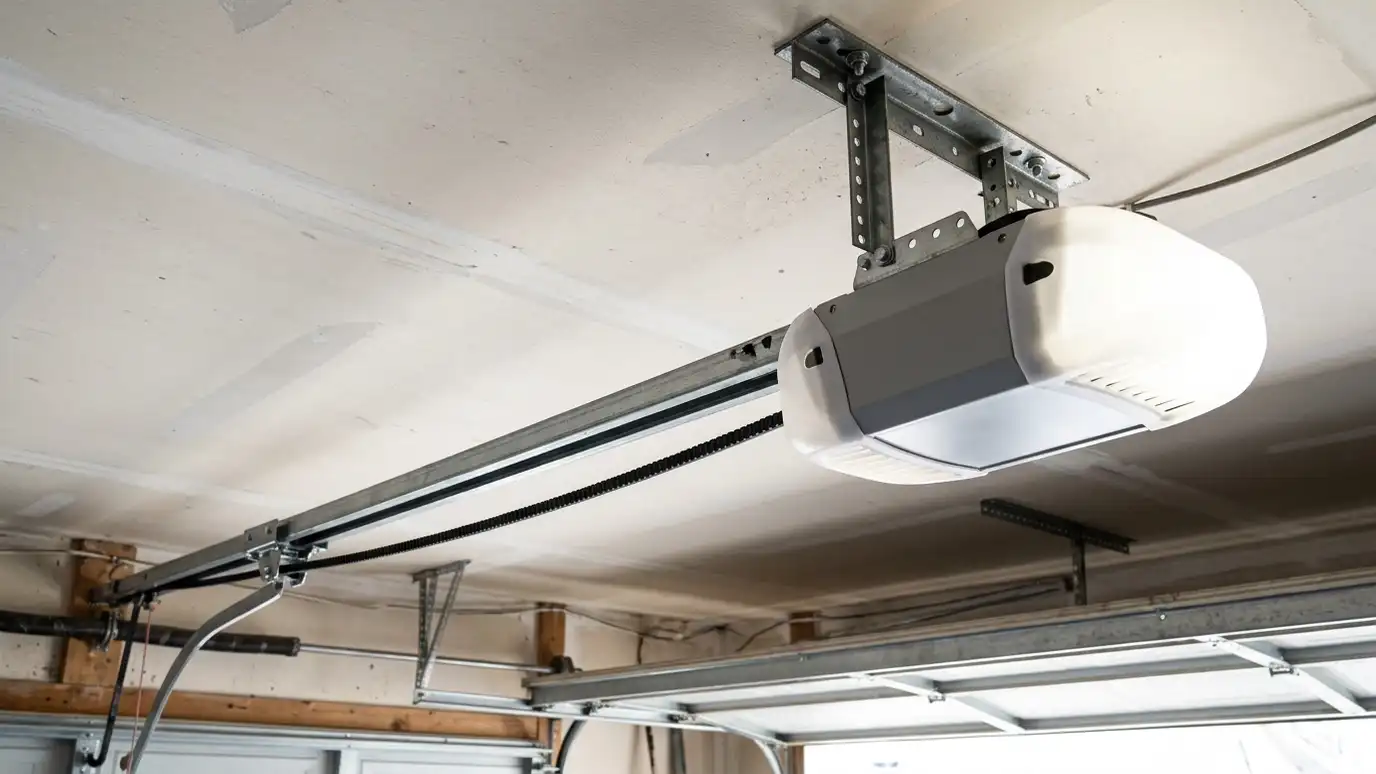
Chain drives are louder than belt drives. A noisy opener may need a tune-up, new rollers on the door or a different drive. Mounting the rail on solid framing and using rubber isolators reduces vibration.
If the door is quiet when you lift it by hand and noisy with the opener, the opener is the source.
A belt drive or wall-mount unit is a quieter upgrade.
To find out whether the opener or the door is noisy, disconnect the opener and move the door by hand if it is safe to do so. If the door is quiet by hand, the opener is the source of the noise.
When to call
Call us when noise is new, loud or getting worse, when the door shudders or when you hear grinding. A quick visit can find the source, fix it and save the door from damage.
Our problem checker tool can help you narrow the cause.
A quiet door is usually a healthy door.
After repairs, take note of the sound for a week. A quiet door that gets louder again usually means a part is wearing, and a short visit can find it before the sound turns into a failure.
Match the sound to the cause, lubricate the right parts and replace worn rollers and hinges instead of just spraying them.